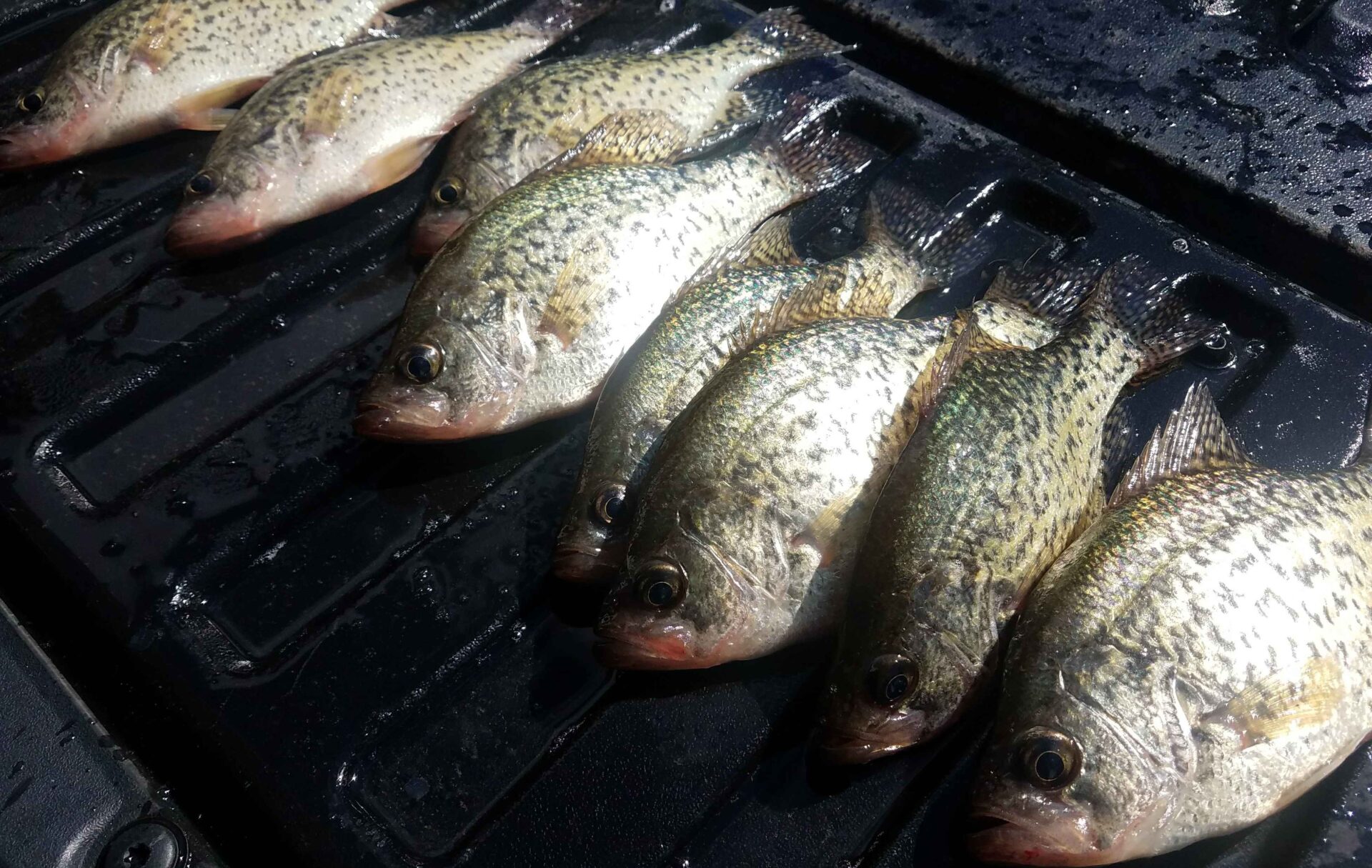
This is a follow up post to my Lake Erie crappie fishing article. This breaks down each technique for catching crappie. All of these techniques apply to Lake Erie Crappie as well as other lakes.
Top Ways to Catch Crappie
| Method | Best For | Key Techniques | Best Baits & Lures | Best Seasons |
|---|---|---|---|---|
| Jig Fishing | Most effective overall | Vertical jigging, casting, dock shooting | Soft plastic jigs, marabou jigs, tube jigs | Year-round (best in spring & fall) |
| Live Bait Fishing | Beginners & natural presentations | Bobber rig, slip bobber, tight-lining | Minnows, waxworms, crickets | Spring, fall, winter |
| Trolling | Covering large areas, finding schools | Spider rigging, longline trolling | Small crankbaits, Road Runner jigs | Summer, late spring |
Understanding Crappie Behavior
Crappie fishing is a little easier when you understand their behavior. Depending on the time of year, crappie move around. In the spring you can find them shallow. In the summer you can find them roaming basins in large schools looking for food. In the fall and winter, it’s a mix of both. Timing depends on water temperature.
Seasonal Movements and How They Affect Fishing
Crappie change locations throughout the year based on water temperature and spawning cycles. They also are known to “roam” in lake basins. This is especially true in late summer and in the winter. My favorite season is the transition from spring to summer. I also do an occasional trip in early spring to find a trophy crappie. When the females have eggs.
- Spring (Spawn Season)
- Crappie move into shallow water (2-6 feet) near brush, docks, and vegetation.
- This is the best time for fast action using jigs and live bait.
- Summer (Post-Spawn & Deep Water Period)
- Crappie transition to deeper waters (10-25 feet), often suspending near drop-offs.
- Trolling and vertical jigging become the most effective methods.
- Fall (Feeding Frenzy Before Winter)
- Crappie return to shallower waters and feed aggressively to prepare for winter.
- Casting and retrieving jigs or using live minnows works well.
- Winter (Ice Fishing & Deepwater Holding)
- Crappie school tightly under ice or in deep basins of lakes.
- Ice fishing techniques with small jigs and electronics are essential.
Best Times of Day to Catch Crappie
Crappie are most active during low-light conditions. However, during the day they can be found in deeper water roaming in schools, unless it is spawning season. If you find a school during daylight hours, they are relatively easy to catch. During spawning season, they remain in shallow water around cover.
- Early morning (sunrise to 9 AM) – Best feeding window
- Evening (4 PM to sunset) – Second-best time
- Night fishing – Effective under lights that attract baitfish
Best Ways to Catch Crappie
Let’s be clear, there are more than 3 ways to catch crappie. However, after years of crappie fishing success stories and expert analysis, these three methods have proven to be the most effective.
Jig Fishing for Crappie
Jig fishing is the go-to technique for crappie anglers because of its versatility and effectiveness.
Best Types of Jigs for Crappie
- Soft plastic jigs – Imitate minnows and small prey (e.g., curly tail grubs, paddle tails).
- Marabou jigs – Excellent for slow presentations with natural movement.
- Tube jigs – Great for vertical jigging and dock shooting.
Jig Colors Based on Water Conditions
| Water Clarity | Best Jig Colors |
|---|---|
| Clear Water | White, Chartreuse, Silver |
| Stained Water | Pink, Purple, Orange |
| Murky Water | Black, Blue, Dark Green |
Jigging Techniques for Crappie
- Vertical jigging – Drop the jig near structure and bounce it slightly.
- Cast-and-retrieve – Slow reeling with slight twitches mimics natural bait.
- Dock shooting – A precision casting technique to get jigs deep under docks.
Live Bait
Live bait, especially minnows, is a crappie favorite.
Best Live Baits for Crappie
- Minnows – The #1 choice; crappie can’t resist them.
- Waxworms – Ideal for ice fishing and panfish setups.
- Crickets & small worms – Work well in some lakes.
Best Rigging Methods for Live Bait
| Rig Type | Description | Best Use |
|---|---|---|
| Bobber Rig | Hooked minnow under a fixed bobber | Shallow water, spring/fall |
| Slip Bobber Rig | Adjustable depth for suspended fish | Summer, deeper water |
| Tight-Lining | Straight line to minnow, no bobber | Deep water, winter fishing |
Trolling for Crappie
Trolling allows you to locate and catch crappie quickly.
Best Trolling Setups for Crappie
- Spider rigging – Using multiple rods at once to present various baits.
- Longline trolling – Dragging jigs or crankbaits behind the boat.
Best Lures for Trolling Crappie
- Crankbaits – Small ones like the Bandit 200 series are excellent.
- Road Runner jigs – Effective at different speeds.
Best Trolling Speeds for Crappie
| Water Temp | Trolling Speed (mph) |
|---|---|
| Cold Water (Under 50°F) | 0.5 – 0.8 mph |
| Mild Water (50-70°F) | 0.8 – 1.2 mph |
| Warm Water (Over 70°F) | 1.2 – 1.5 mph |