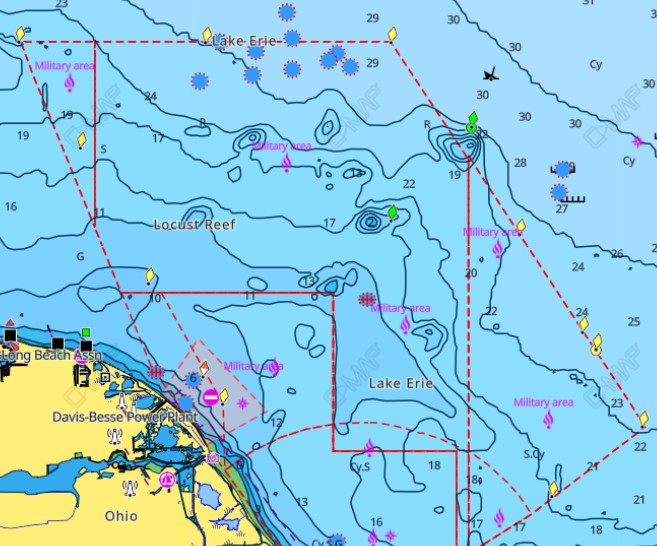
If you fish the reefs in the spring like me, having a Lake Erie Reef Map is essential. They not only help you catch fish, but avoid boating hazards.
Best Places to Buy a Lake Erie Reef Map
| Source | Where To Buy | Best For |
|---|---|---|
| NOAA (National Oceanic and Atmospheric Administration) | NOAA Lake Erie Map | Boaters and general navigation. |
| C-Map | C-Map North America | Anglers looking for insider tips. |
| Navionics | Navionics Charts | Tech-savvy anglers and boaters. |
| State/Local Government Agencies (DNR) | Ohio Website | Recreational fishers and boaters. |
| Angler & Boating Forums | Online forums | DIY enthusiasts and community-driven anglers. |
What Are The Lake Erie Reefs?
Importance of Lake Erie Reefs
Lake Erie has natural and man made reefs. Natural reefs are located all over Lake Erie. Hence the importance of having a map. Not only for boating, but for fishing also.
The most notable reefs are in the western basin. These reefs are home to the walleye spawn in the spring. Each reef has it’s own characteristics, but all hold walleye in the early spring for the spawn. If you are walleye fishing, get a map with detailed contours.
How to Choose the Best Lake Erie Reef Map
You want a map that suits your application. If you are using them for fishing and boating both, you will want one that has navigation as well as contours. If you are just boating, you might be OK with just navigation and less contour detail. You will still want both though!
Types of Reef Maps
- Bathymetric Maps: Show depth variations and underwater topography.
- Fishing-Specific Maps: Highlight prime fishing spots around reefs.
- Navigation Charts: Focus on safe boating routes and potential hazards.
How to Use a Lake Erie Reef Map Effectively
Tips for Interpreting Reef Maps
- Learn to read depth contours and understand reef shapes.
- Use GPS or sonar equipment to confirm reef locations.
Fishing With A Lake Erie Reef Map
Reefs are hotspots for popular Lake Erie fish species:
- Walleye: Found near reefs during spring and fall.
- Yellow Perch: Often congregate around shallow reefs.
- Smallmouth Bass: Prefer rocky reef structures.